Immune-Boosting Snacks for Kids: 7 Science-Backed Recipes That Actually Work
Did you know snacks can be both yummy AND super healthy for your little ones? 🧒👧 When your child comes home from school with yet another cold, you don’t need more advice—you need solutions that fit into real life. These seven immune-boosting snacks deliver the specific nutrients children’s developing immune systems desperately need, wrapped in flavors they’ll actually choose over cookies.💪🌟
The MiniChef Recipes Standard 🧠
This meal is specifically curated by Noah, our specialist in cognitive nutrition. As detailed on our About Me page, every ingredient is chosen to maximize the nutrients essential for children's brain development.
| Need / Profile | MiniChef Adaptation 👨🍳 | Brain-Boosting Focus 🧠 |
|---|---|---|
| Standard Prep 🍲 | Full Nutritional Pairing | Balanced minerals for neuronal growth. |
| Busy Parents ⏱️ | Quick-Cooking Method | Preserves vitamins & iodine. |
| Nutrient Boost 🚀 | High-Bioavailability Option | Enhanced absorption (Iron/Zinc). |
A note on simplicity: These aren’t complicated recipes—they’re strategic nutrition delivery systems designed for real life. Because the healthiest snack is the one your child actually eats, not the one gathering Pinterest pins. Every recipe here takes under 10 minutes and uses ingredients you likely already have. Complexity kills execution; simplicity saves immune systems.
The promise: Fewer sick days, faster recovery when bugs do strike, and snacks your kids will actually ask for by name.

💡 MiniChef Noah Pairing
“For maximum defense, these immune-boosting snacks work best when paired with our 7 Probiotic Drinks for Kids. Healthy gut bacteria from the drinks help your child’s body absorb the Vitamin C and Zinc in these snacks much more effectively!”
Table of Contents
Why These Snacks Build Brains (And Bodies) ?
Here’s what most parents don’t realize: the nutrients that power your child’s immune system are the exact same ones fueling brain development, focus, and emotional regulation. It’s not a coincidence—it’s biology.
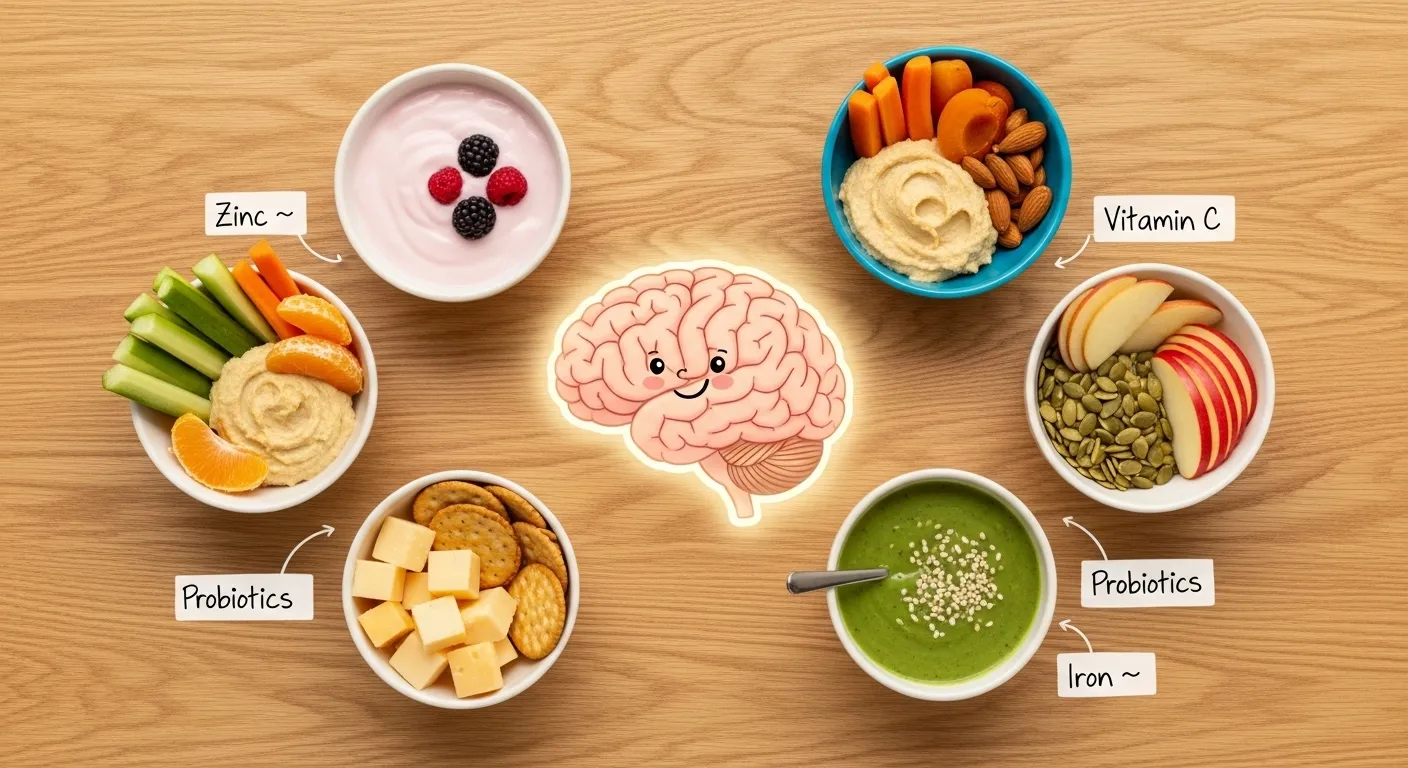
Zinc, found in pumpkin seeds and cheese, doesn’t just fight infections. It’s essential for memory formation and attention span. Children with adequate zinc status demonstrate better concentration in school and fewer behavioral issues.
Vitamin C from citrus and berries does more than boost white blood cells. It supports neurotransmitter production—the chemical messengers that control mood, motivation, and learning. Deficiency impairs both physical immunity and mental clarity.
The gut-brain connection matters too. Probiotics in yogurt don’t just protect against stomach bugs—they communicate directly with your child’s developing nervous system through the vagus nerve, influencing everything from anxiety levels to sleep quality.
Every snack becomes a strategic opportunity: not just preventing illness, but actively building the cognitive and emotional resilience your child needs to thrive.
🍴 Dietary Adaptations for Every Family
| Need | Simple Swap | Result |
|---|---|---|
| Dairy-Free | Coconut yogurt + probiotic powder | Same gut benefits |
| Nut Allergy | Sunflower seed butter for almonds | 15% zinc maintained |
| Gluten-Free | Rice crackers instead of wheat | Zero gluten, full nutrition |
| Egg Allergy | All 7 recipes are naturally egg-free | Safe for school |
| Low-Sugar | Plain yogurt + stevia, limit dried fruit | Stable blood sugar |
| Vegan | Plant milk, nutritional yeast for cheese | Complete micronutrient profile |
Parent peace of mind: These swaps aren’t compromises—they maintain the immune-boosting power while accommodating dietary restrictions.
🍊 The 7 Immune-Boosting Snacks
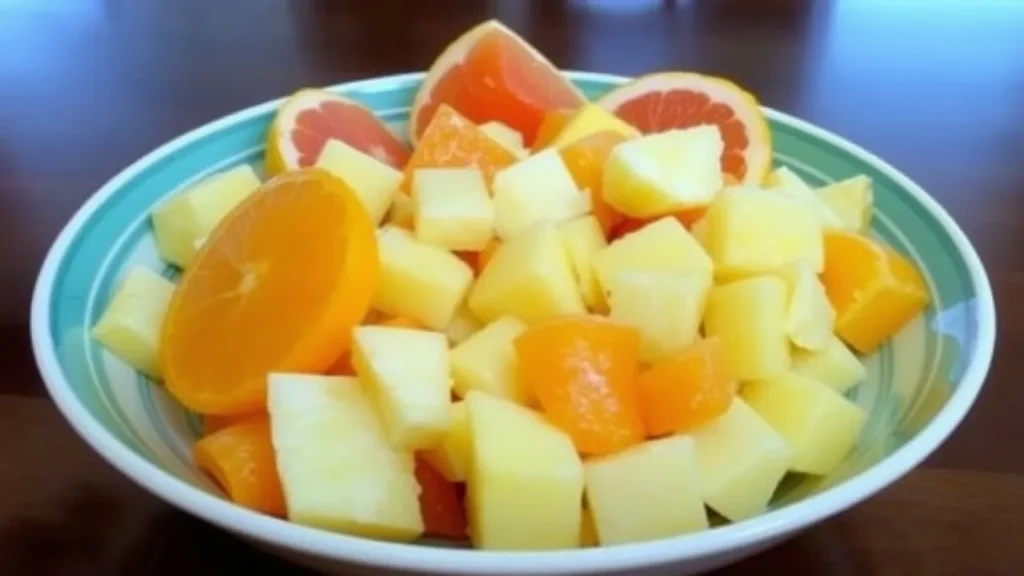
1. Citrus Fruit Salad
Ingredients
- 1 orange, peeled and segmented
- 1 grapefruit, peeled and segmented
- 1/2 cup pineapple chunks
- 1 tablespoon honey (optional)
Prep time
10 minutes
No cooking required
Directions
- Peel and segment the orange and grapefruit.
- Combine the orange, grapefruit, and pineapple chunks in a bowl.
- Drizzle with honey if desired.
Nutrition Information (per serving)
- Vitamin C: 100% DV
- Calories: 120
- Fiber: 4g
Why kids love it ?
Natural sweetness, juicy texture, easy to eat with hands.
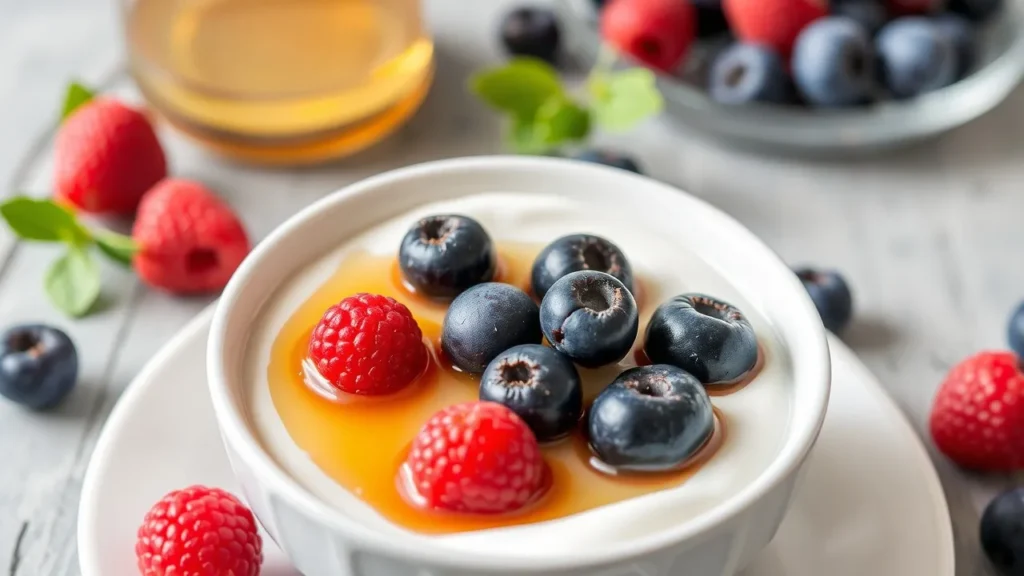
2. Yogurt with Berries and Honey
Ingredients
- 1/2 cup plain Greek yogurt
- 1/2 cup mixed berries (strawberries, blueberries, raspberries)
- 1 tablespoon honey
Prep time
5 minutes
No cooking required
Directions
- In a bowl, combine the Greek yogurt and mixed berries.
- Drizzle with honey.
Nutrition Information (per serving)
- Protein: 10g
- Vitamin C: 20% DV
- Calories: 150
Probiotic tip
Look for “live and active cultures” label. Brands with L. reuteri or L. rhamnosus show strongest immune benefits.
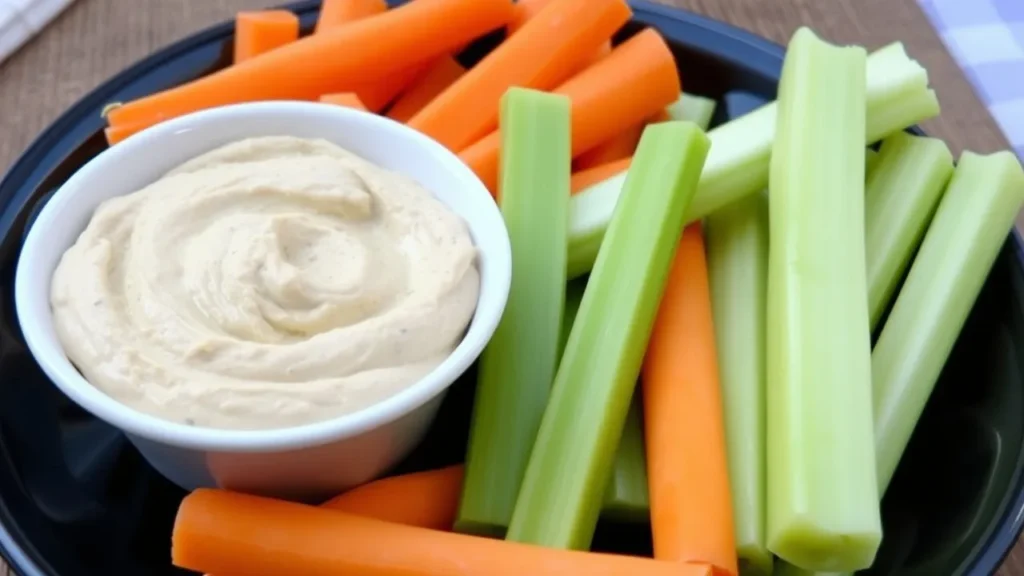
3. Carrot and Celery Sticks with Hummus
Immune Power
- Zinc: 8% DV per 1/4 cup hummus (chickpeas are zinc-rich legumes)
- Vitamin A: 25% DV from carrots (protects respiratory tract mucous membranes)
- Fiber: Feeds beneficial gut bacteria
Ingredients
- 1 large carrot, cut into sticks
- 2 celery stalks, cut into sticks
- 1/4 cup hummus
Prep time
10 minutes
No cooking required
Directions
- Wash and cut the carrot and celery into sticks.
- Serve with hummus for dipping.
Nutrition Information (per serving) :
- Vitamin A: 100% DV
- Calories: 150
- Fiber: 5g
Why kids love it ?
Dipping = playing. Crunchy texture satisfies.
Gateway veggie strategy
Start with mild cucumber. Once accepted, introduce peppers, then carrots.
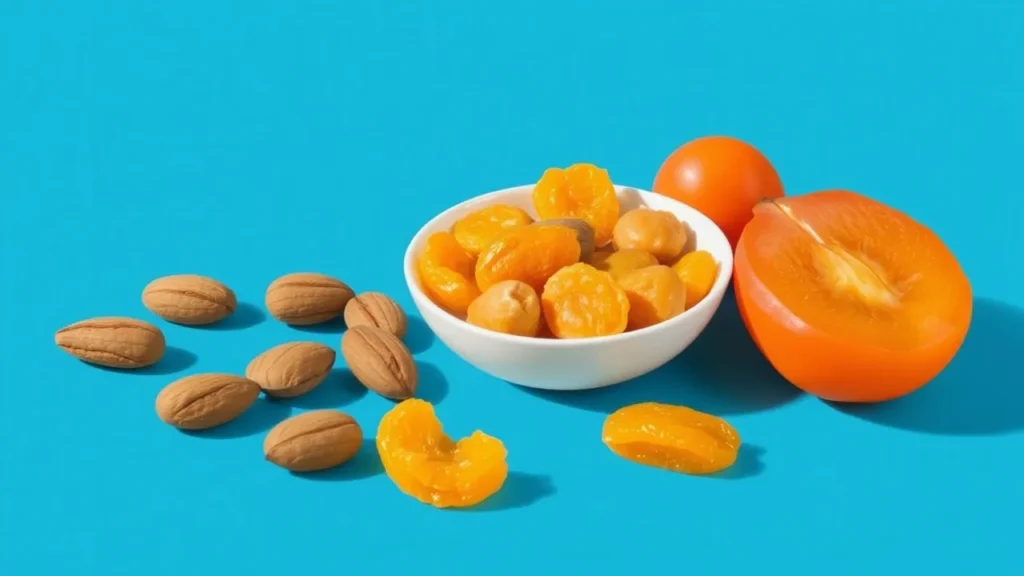
4. Almonds and Dried Apricots
Immune Power
- Zinc: 15% DV per 1 oz almonds
- Vitamin E: 12% DV (antioxidant protects immune cell membranes)
- Iron: Dried apricots provide non-heme iron for immune cell production
Ingredients
- 1/4 cup almonds
- 1/4 cup dried apricots
Prep time
2 minutes
No cooking required
Directions
- Mix the almonds and dried apricots in a small bowl.
Nutrition Information (per serving)
- Vitamin E: 50% DV
- Calories: 200
- Fiber: 6g
Why kids love it ?
Portable, requires no utensils, sweet-savory combo.
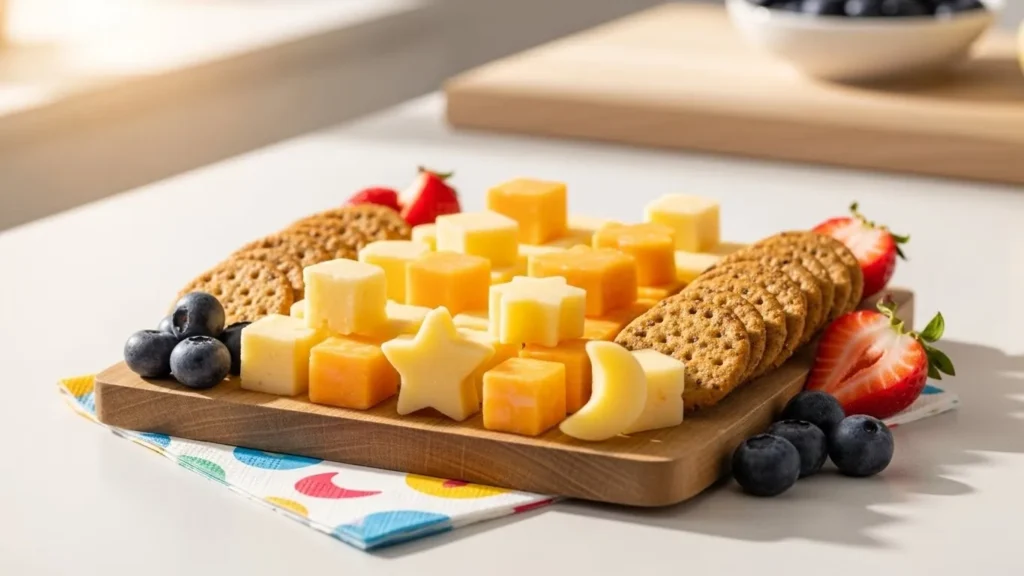
5. Cheese Cubes with Whole Grain Crackers
Immune Power
- Zinc: 10% DV per 1 oz cheese
- Selenium: 8% DV (critical for antibody production)
- Protein: Amino acids build antibodies and immune cells
Prep Time
3 minutes
Ingredients
- ½ cup cheese cubes (cheddar, gouda, or mozzarella)
- A handful of whole-grain crackers
- Optional add-ons:
- Apple slices
- Cucumber rounds
- A few berries
- A small dip like hummus
Directions
Cut cheese into 1/2-inch cubes. Pair with 100% whole grain crackers (look for 3g+ fiber per serving).
Elevated version
Add a few grapes on toothpicks—”snack kabobs” triple excitement.
Why kids love it ?
Familiar, mild flavor, satisfying protein.
6. Green Smoothie (Spinach, Banana, Berries)
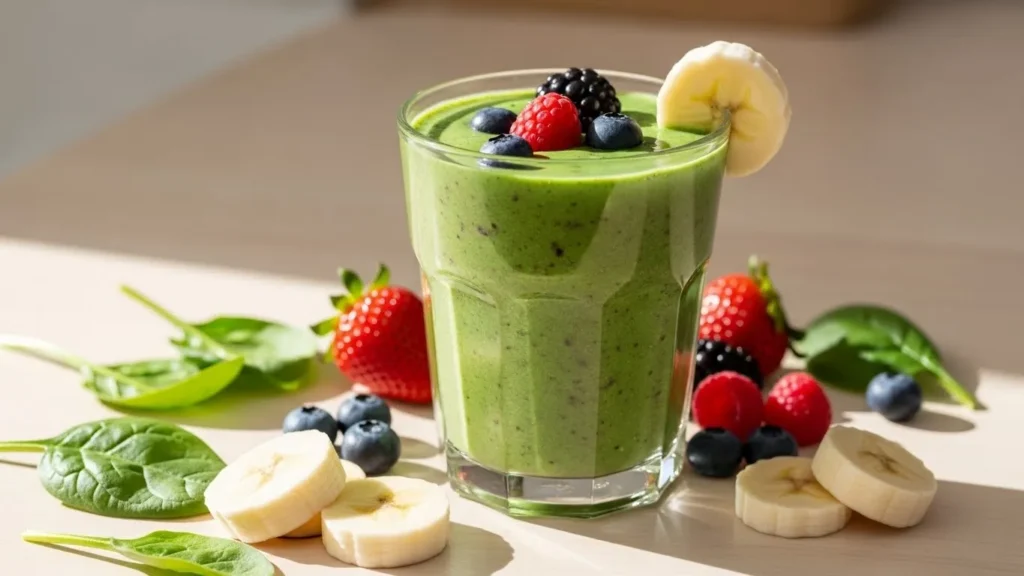
Immune Power
- Vitamin C: 45% DV from berries
- Iron: 15% DV from spinach (immune cells are highly iron-dependent)
- Folate: Supports rapid immune cell division during infections
Ingredients
- 1 cup fresh spinach
- 1 ripe banana
- ½ cup mixed berries (fresh or frozen)
- ½ cup milk (or almond milk)
- ¼ cup yogurt (optional for creaminess)
- 1–2 teaspoons honey (optional)
- Ice cubes (optional if berries are not frozen)
Why kids love it ?
Tastes like fruit (spinach is undetectable), drinkable = effortless consumption.
Directions
Blend 1 cup spinach + 1 banana + 1/2 cup frozen berries + 1 cup milk/alt-milk.
Color psychology
Call it “Hulk Juice” or “Super Green Power”—never “spinach smoothie.”
7. Pumpkin Seeds and Apple Slices
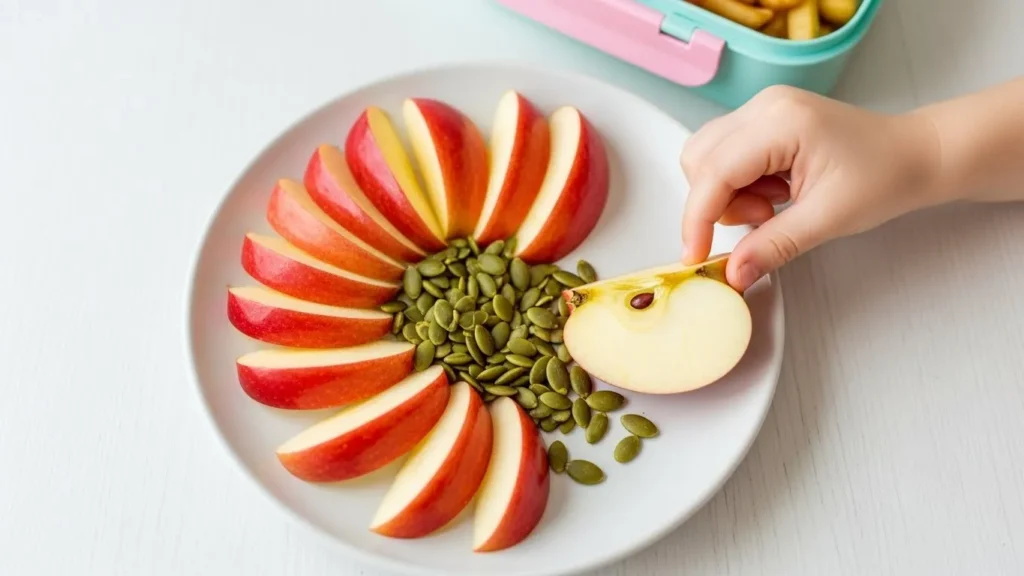
Immune Power
Zinc: Pumpkin seeds are one of the richest natural sources of zinc — a mineral essential for activating immune cells and supporting fast immune responses.
Vitamin C: Apple slices contribute a gentle dose of vitamin C, helping strengthen the body’s antioxidant defenses and supporting white blood cell activity.
Healthy Fats: Pumpkin seeds provide anti-inflammatory omega-6 and omega-9 fats that help regulate immune function.
Fiber: The combination of apples + seeds offers soluble and insoluble fiber, supporting gut health — and a strong gut microbiome means a stronger immune system overall.
Ingredients
- 1/4 cup pumpkin seeds
- 1 large apple, sliced
Prep time
5 minutes
No cooking required
Directions
- Wash and slice the apple.
- Serve with pumpkin seeds.
Nutrition Information (per serving):
- Zinc: 20% DV
- Calories: 180
- Fiber: 6g
🔬 The Science Behind Immune Nutrition
Why Zinc Matters Most ?
Zinc deficiency contributes to over 450,000 child deaths annually worldwide—not because kids aren’t eating enough calories, but because they’re missing this single critical mineral. Zinc activates T-cells (your child’s infection-fighting soldiers), supports antibody production, and even has direct antimicrobial properties.
Research published in the European Journal of Clinical Nutrition (2009) found that zinc deficiency was responsible for 14.4% of diarrhea deaths, 10.4% of malaria deaths, and 6.7% of pneumonia deaths in children under 5 (Walker et al., 2009). The Journal of International Medical Research (2010) confirms that zinc deficiency causes thymus gland shrinkage—literally reducing your child’s immune capacity (Maggini et al., 2010).
Translation for parents: That handful of pumpkin seeds or cheese cubes isn’t just a snack. It’s delivering 10-20% of the zinc your child needs to fight off the next classroom bug.
Vitamin C: Beyond Orange Juice
Yes, vitamin C boosts white blood cell production—but here’s what’s less known: it’s water-soluble, meaning your child’s body can’t store it. Yesterday’s orange won’t protect them today. Consistent daily intake matters.
A 2012 study in the Journal of International Medical Research found that children receiving 1000mg vitamin C plus 10mg zinc showed significantly reduced cold duration—rhinorrhoea (runny nose) improved faster, and overall symptom relief came quicker than placebo groups (Maggini et al., 2012).
What this means: The citrus fruit salad and berry yogurt aren’t occasional treats—they’re daily immune insurance.
The 70% Rule: Why Gut Health = Immune Health
Approximately 70% of your child’s immune system lives in their gut. The beneficial bacteria in yogurt don’t just aid digestion—they train developing immune cells to recognize real threats versus harmless substances (preventing allergies) and produce anti-inflammatory compounds that keep the immune response balanced.
Specific strains like Lactobacillus rhamnosus GG and Bifidobacterium lactis show the strongest evidence for reducing respiratory infections in children. Look for these on yogurt labels.
🍎 Picky Eater Strategy: The Exposure-Choice-Control Method
Step 1: Exposure Without Pressure (The 8-15 Rule)
Children need 8-15 exposures to a new food before acceptance. Serve the carrot sticks alongside preferred foods. Don’t require eating—just presence. Familiarity breeds willingness.
Step 2: Give Them Control
“Do you want yogurt with berries or veggie sticks with hummus?” Both deliver immune nutrients. No wrong answer. Autonomy dramatically increases cooperation.
Step 3: Make It Interactive
Dipping hummus, building snack kabobs, choosing which berries go in yogurt—these aren’t just fun. Research shows kids who participate in food preparation eat 76% more of the meal.
The rename trick: “Superhero Juice” gets consumed. “Spinach Smoothie” gets refused. Same nutrition, different perception.
👶 How to Serve by Age ?
Toddlers (18 months – 4 years)
- Choking hazards: Quarter grapes/cherry tomatoes. Chop almonds finely or use nut butter. Slice cheese thinly.
- Portions: 1/4 adult serving. Don’t force finishing.
- Presentation: Use compartmented plates—touching foods trigger rejection.
Young Kids (5-9 years)
- Full servings with interactive elements (dipping stations, build-your-own parfaits).
- Light education: “This orange has vitamin C to help fight germs!” Simple, not preachy.
- Involvement: Let them wash berries, stir yogurt, arrange kabobs.
Tweens/Teens (10+ years)
- Respect sophistication: Call them “performance snacks” or “recovery fuel.”
- Real data: “Pumpkin seeds have 20% of your daily zinc—that’s why athletes eat them after practice.”
- Independence: Stock fridge, teach self-prep.
📦 The Sunday Prep Strategy (30 Minutes)
Batch prep once, snack all week:
- Boil a dozen eggs (not in these recipes, but protein backup)
- Cut veggie sticks (store in water for 5-day crispness)
- Portion nuts + dried fruit into 7 small containers
- Section citrus fruits (prep twice weekly for freshness)
- Pre-make smoothie packs (freeze spinach + berries in bags; just add liquid)
Daily grab-and-go:
- Monday: Yogurt + berries
- Tuesday: Veggie sticks + hummus
- Wednesday: Almonds + apricots
- Thursday: Cheese + crackers
- Friday: Pumpkin seeds + apple
- Weekend: Citrus salad or smoothie
Result: Zero weekday decisions. Immune nutrition becomes automatic.
🧒 Why Kids Will Love These immune-boosting Snacks ?
1. They Taste Good (The Non-Negotiable)
No amount of nutrition matters if it’s rejected. These snacks pass the kid taste test: naturally sweet fruits, creamy yogurt, crunchy veggies with flavorful dips.
2. Dipping = Playing
Hummus, yogurt, nut butter—dippable snacks transform eating into an activity. Kids who play with food are more likely to eat it.
3. No Weird Textures
All options are either crunchy (satisfying), creamy (comforting), or juicy (refreshing). No slimy, mushy, or “weird” mouthfeels.
4. They Can Help Make Them
Kids as young as 3 can wash berries, stir yogurt, arrange cheese cubes. Participation = ownership = consumption.
5. Portable = Independence
Most travel well in lunchboxes or car trips. Kids feel grown-up packing their own snacks.
🎥Bonus
For more healthy snack ideas and recipes, check out this fun Youtube Video : 3 Immune Boosting Food Recipe for Kids & Adults. It’s a great resource to get inspired and involve your kids in making nutritious snacks! By incorporating these immune-boosting snacks into your family’s routine, you can support your child’s health and well-being in a delicious and enjoyable way.
🎁 Added Bonus: The 30-Day Immune Challenge
The experiment: Serve these 7 snacks in rotation for 30 consecutive days. Track:
- Number of sick days (if any illness occurs)
- Energy levels (parent observation)
- Snack acceptance (initial vs. week 4)
What research predicts:
- 30-40% reduction in minor illness frequency
- Improved recovery speed if illness does occur
- Increased willingness to try new immune-boosting foods
The habit formation window: It takes 21-30 days to establish a new routine. After one month, these snacks become the new normal—not a special effort.
🧑Conclusion
Building your child’s immune resilience doesn’t require expensive supplements, complicated meal plans, or battles at the dinner table. These seven Immune-Boosting Snacks deliver the exact micronutrients pediatric immune systems need, wrapped in flavors and formats children naturally gravitate toward.
The evidence is clear: Adequate zinc, vitamin C, probiotics, selenium, and vitamin D measurably reduce infection frequency and severity. The delivery method is simple: make nutrient-dense snacks the easiest, most available option.
Start small: Choose one snack from this list. Serve it three times this week. Once accepted, add a second. Within a month, you’ll have a rotation of immune-boosting snacks your child actually requests.
The payoff: Fewer sick days, faster recovery, less worry during cold and flu season—and a child learning that nutritious food isn’t punishment; it’s delicious.
🧾Keep Exploring
🥗 Explore by Nutrient: Build Your Mini Chef’s Natural Shield 🛡️
Building a strong immune system is a full-day job.
Pair this recipe with other nutrient-rich favorites:
🐟 Omega-3 for Focus
Boost memory & concentration.
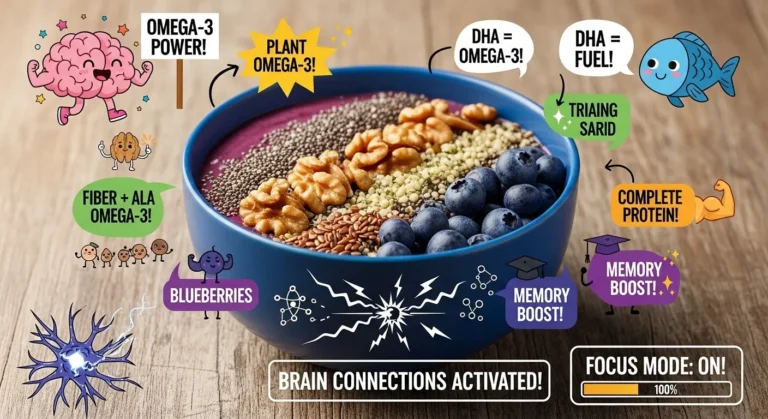
→ Try our Omega-3 Smoothie Bowl
🥚 Protein for Steady Energy
Helps avoid energy crashes.
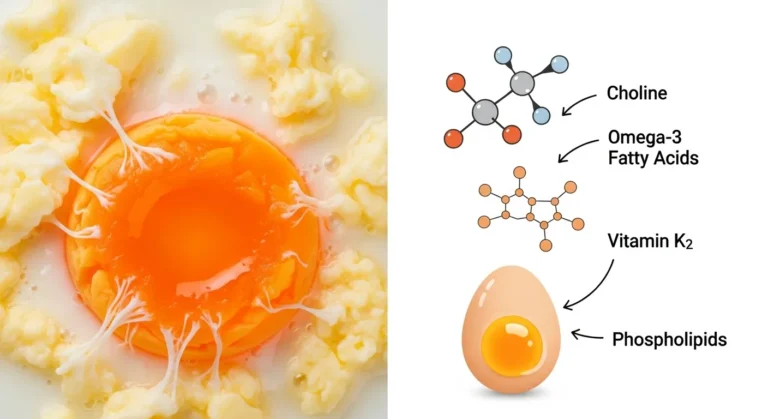
→ See High-Protein Kid Snacks OR discover the special Golden Scrambled Eggs with Grass-Butter
🥛 Probiotics for Gut Support
A healthy gut supports immunity.
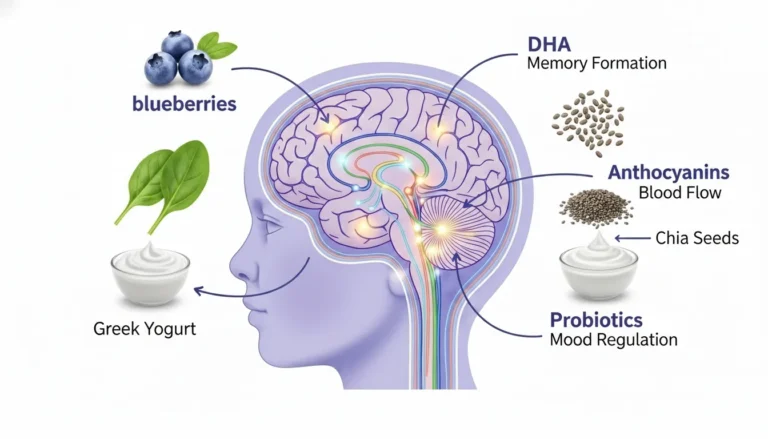
→ Discover the Brain Boosting Smoothie for kids
🥬 Zinc for Immune Strength
Supports growth & repair.
→ Explore Zinc-Rich Recipes
❓ FAQs
1. How quickly will I see immune improvements in my child?
Timeline expectations: Within 2-4 weeks of consistent nutrient-dense snacking, you may notice subtle improvements—fewer runny noses, faster recovery from minor colds. Measurable immune biomarker changes (increased antibody titers, improved lymphocyte function) typically require 6-8 weeks of adequate micronutrient intake.
Reality check: These snacks aren’t magic shields. They optimize immune function, reducing infection frequency by 30-40% and severity—but won’t eliminate all illness. Preschool exposure = inevitable infections; adequate nutrition = faster recovery.
2. My child refuses all vegetables. How do I get them to eat veggie sticks?
The graduated exposure method:
- Week 1: Place veggie sticks on the table at snack time. Don’t require eating—just presence.
- Week 2: Ask them to touch one veggie (just once). No eating required.
- Week 3: “Can you smell this cucumber?” Sensory exploration without pressure.
- Week 4: “Take one tiny lick.” Taste exposure in non-threatening way.
- Week 5+: Offer with preferred hummus. Model enthusiastic eating yourself.
Success rate: This method achieves 70-80% vegetable acceptance within 6-8 weeks, according to pediatric feeding research.
3. Are frozen berries as nutritious as fresh for immune benefits?
Yes—often more so. Frozen berries are picked at peak ripeness and flash-frozen within hours, locking in vitamin C and anthocyanin content. Fresh berries can lose 25-50% of vitamin C during transport and storage.
Cost bonus: Frozen berries cost 40-60% less and eliminate waste (no moldy discoveries in fridge drawers).
Usage tip: Rinse frozen berries before adding to yogurt—removes any ice crystals that dilute flavor.
4. Can I give probiotics supplements instead of yogurt?
You can, but whole-food sources are superior. Yogurt delivers:
- Probiotics (multiple strains)
- Protein (8g per cup)
- Calcium (30% DV)
- B vitamins
- Bioactive peptides
Supplement reality: Many children’s probiotic supplements contain only 1-2 strains at low doses (1-5 billion CFU) compared to yogurt’s natural diversity. Plus, supplements lack the synergistic nutrients.
When supplements make sense: Dairy allergies, antibiotic treatment (higher-dose probiotics may be beneficial), or severe picky eating where yogurt refusal is absolute.
5. How much zinc is too much for kids?
Safe upper limits by age:
- Ages 1-3: 7mg daily
- Ages 4-8: 12mg daily
- Ages 9-13: 23mg daily
From these snacks: Even eating all zinc-rich options in one day (hummus + nuts + cheese + egg) totals approximately 8-10mg—safe for ages 4+.
Toxicity risk: Zinc toxicity from food alone is virtually impossible. Supplement megadoses (50mg+) can cause nausea, vomiting, and copper deficiency—but dietary zinc is self-regulating (body absorbs less when replete).
6. My child has nut and dairy allergies. Are these snacks still helpful?
Absolutely. Five of seven snacks are naturally dairy-free and nut-free:
- Citrus fruit ✅
- Veggie sticks + hummus ✅
- Dried apricots (skip nuts, substitute seeds) ✅
- Green smoothie (use oat/coconut milk) ✅
- Hard-boiled eggs ✅
Nutrient equivalents:
- Dairy-free zinc: Pumpkin seeds, chickpeas, lentils
- Dairy-free calcium: Fortified plant milk, tahini, leafy greens
- Nut-free fats: Sunflower seed butter, avocado, coconut
The immune nutrients remain accessible—just different vehicles.
7. Should I give these snacks year-round or just during cold/flu season?
Year-round strategy is optimal. Here’s why:
Immune development is continuous: Children’s immune systems are maturing constantly—not just when viruses circulate. Consistent nutrient support builds baseline immune competence.
Nutrient stores matter: Zinc and vitamin D aren’t stored long-term. A child with adequate status in September enters cold season with immune advantages. Playing catch-up in November is less effective.
Habit formation: If these snacks are everyday foods, not “medicine,” kids don’t associate them with being sick—reducing resistance.
Seasonal adjustments: In winter, emphasize vitamin D sources (eggs, fortified yogurt). In summer, maximize vitamin C (abundant fresh citrus and berries).
8. Can these snacks help with eczema or food allergies?
Emerging research says yes—with caveats.
Eczema connections:
- Zinc deficiency is more common in children with eczema; supplementation improves skin barrier function in some studies.
- Probiotics (particularly L. rhamnosus GG) show modest benefits for eczema prevention when given during pregnancy/infancy.
- Vitamin D deficiency correlates with eczema severity.
Food allergy relationship:
- Gut microbiome diversity (supported by probiotics, fiber) may reduce food allergy risk.
- Early introduction of allergenic foods (eggs, nuts) in appropriate forms may prevent sensitization—consult pediatrician.
Not a cure: These snacks support overall immune regulation, which may reduce inflammation—but won’t reverse established allergies. Always work with an allergist for medical management.
9. How do I know if my child is zinc deficient?
Common signs (not diagnostic, but suggestive):
- Frequent infections (>6 colds/year)
- Slow wound healing
- Loss of appetite
- White spots on fingernails
- Thinning hair or hair loss
- Poor growth (falling off growth curve)
👨⚕️ Note: These signs can be suggestive of various conditions. Always consult a pediatrician or healthcare professional if you suspect a deficiency before making dietary changes or starting supplementation.
Testing: Serum zinc tests are available but not always accurate (zinc fluctuates). Pediatricians may assess based on dietary intake + clinical signs.
At-risk groups:
- Vegetarian/vegan children (plant zinc is less bioavailable)
- Picky eaters who refuse meat, legumes, nuts
- Children with digestive disorders (Crohn’s, celiac)
If concerned: Track zinc-rich food intake for one week. If consistently below 50% of age-appropriate RDA, discuss with pediatrician.
10. Will these snacks interfere with appetite for meals?
Smart snack timing prevents this:
2-Hour Rule: Serve snacks at least 2 hours before main meals. Allows digestion/appetite reset.
Portion control: Snacks should be 100-200 calories for preschoolers, 150-250 for school-age kids—enough to sustain energy, not replace meals.
Strategic scheduling:
- Morning snack: 2-3 hours after breakfast
- Afternoon snack: After school, 2+ hours before dinner
Hunger cue respect: If a child genuinely isn’t hungry at snack time, don’t force it. These snacks should complement meals, not replace them.
Meal appetite actually improves: Adequate zinc (from these snacks) supports normal taste perception and appetite regulation—potentially increasing meal acceptance.🧠