Nutritious Breakfast for Kids Brain Development: Avocado Toast with Egg Recipe
A nutritious breakfast for kids brain development combines protein, healthy fats and fiber-rich carbohydrates. Together they give kids energy, support growth and learning, and keep them full through the school morning.
This Avocado Toast with Egg delivers choline from the egg (a nutrient involved in memory and brain development), monounsaturated fats from avocado, and fiber from whole grain toast, all in under 10 minutes.
Hey there, exhausted parent! 🥑
Let’s be real: You’re not looking for another “perfect Pinterest breakfast” that requires 15 ingredients and a culinary degree. You need a nutritious breakfast for kids brain development that actually works on a Tuesday morning when everyone’s running late, the lunch boxes aren’t packed, and your kid just announced they hate everything green.
Here’s the truth: This Avocado Toast with Egg isn’t just easy—it’s sneaky brilliant. While your kids think they’re eating “normal toast,” you’re serving nutrients that growing brains use, bite by bite. And the best part? Ten minutes. That’s it.
No judgment here if you’ve served cereal three days in a row. We’re on your team, and this recipe is about to become your new breakfast hero—not because it’s aspirational, but because it’s actually achievable.
Quick Summary:
Eggs give protein and choline, avocado gives healthy fats and fiber, and whole grain toast adds more fiber. Research links eating breakfast with better school performance, but it shows associations, not proof. This plate is a nutritious, filling start to the day.
Table of Contents
⏱️ The Real Talk Breakdown
Prep Time
5 minutes (actually 5 minutes, not “recipe writer 5 minutes”)
Cook Time
5 minutes
Servings
1 (scale up easily—see Sunday prep hack below)
Difficulty
So easy your 6-year-old can help (with an adult at the stove)
Parent Sanity Level
High ✨
🧠 Why This Breakfast Supports Brain Development
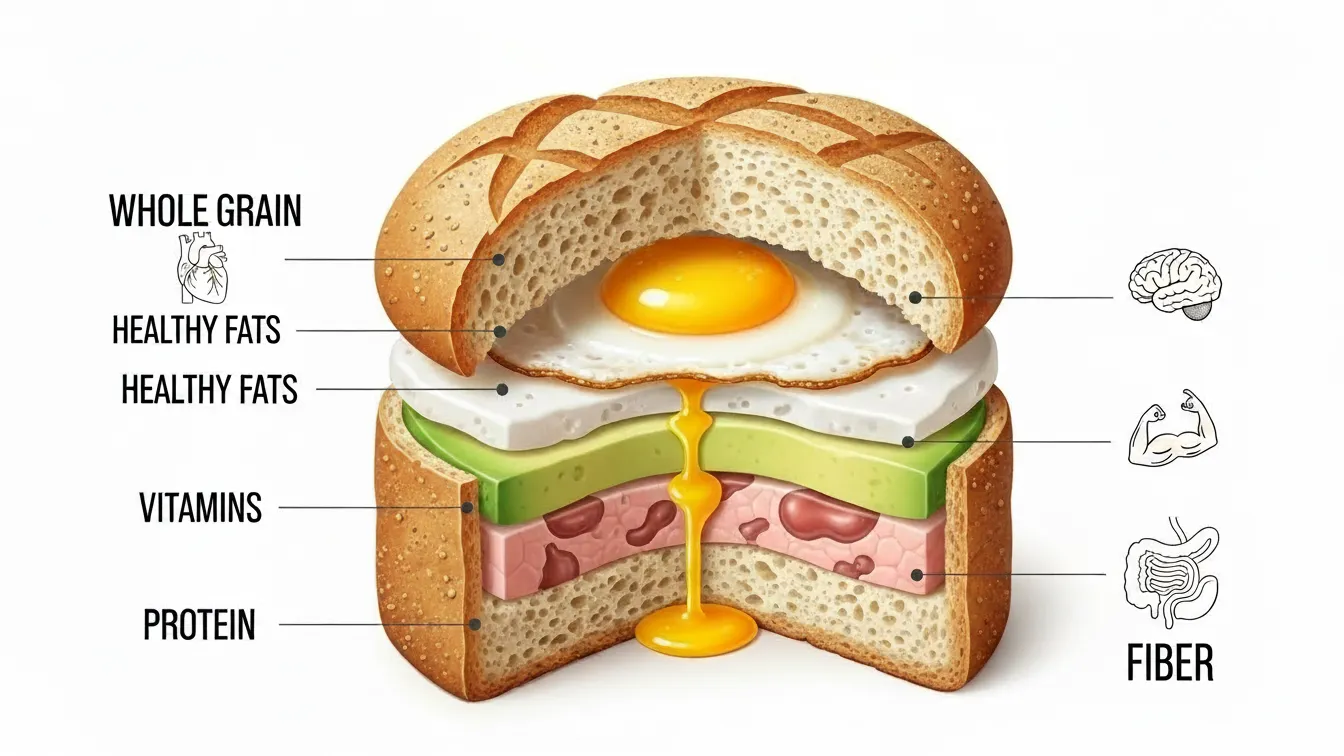
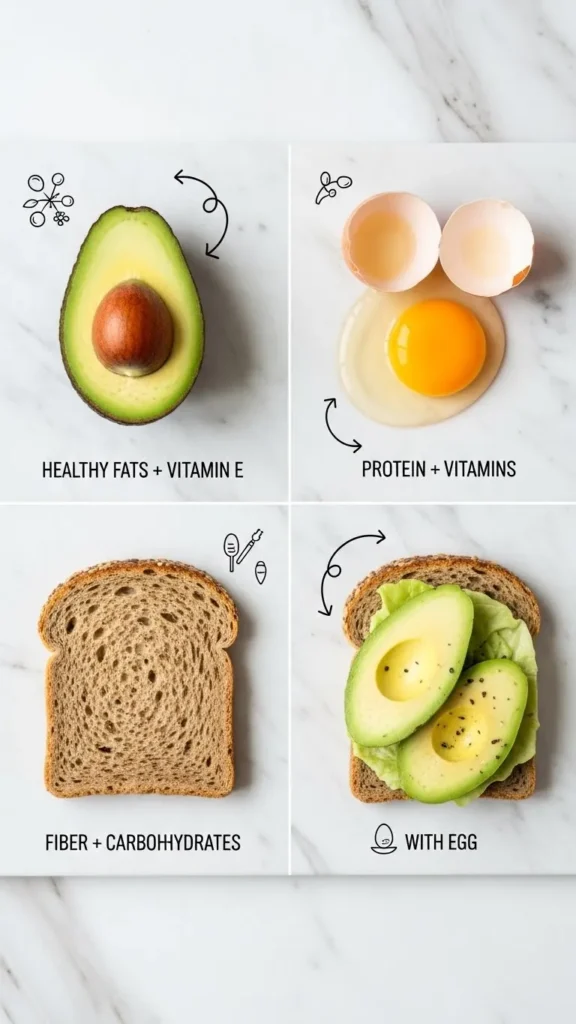
Every ingredient in this nutritious breakfast for kids brain development has a job. No single food determines how a child thinks or behaves, but a plate with protein, healthy fats and fiber is a solid start to the day.
The Egg: Protein and Choline
Eggs are one of the richest dietary sources of choline, a nutrient the body uses to make acetylcholine, a neurotransmitter involved in memory. One large egg has about 147 mg of choline, roughly 40–75% of the adequate intake for children aged 1 to 13 (200 mg for ages 1–3, 250 mg for ages 4–8, 375 mg for ages 9–13). Many people don’t reach the adequate intake for choline, so an egg is a practical way to help. A large egg also has about 6 g of protein.
The Avocado: Healthy Fats and Fiber
Avocado is rich in monounsaturated fat, the type also found in olive oil, and in fiber. Fat helps the body absorb fat-soluble vitamins and keeps kids full. Avocado also contains some lutein, a pigment found in leafy greens and egg yolks, though in smaller amounts than leafy greens.
The Whole Grain Toast : Fiber
Whole grains keep the fiber and many of the minerals that are removed when grains are refined. Fiber helps kids feel full for longer.
The Bottom Line:
This plate gives kids protein, healthy fats and fiber: a solid start to the morning.
🛒 Ingredients (With Brain-Boosting Upgrades)
| Ingredient | Quantity | Brain Benefit | Budget Hack |
|---|---|---|---|
| Whole grain bread | 1 slice | Whole grain carbs (glucose is the brain’s main fuel), plus fiber and B vitamins | Store brands are often cheaper. Compare labels (look for “whole grain” or “100% whole wheat” first on the ingredient list) |
| Ripe avocado | ½ medium | Healthy fats, plus some lutein, a pigment that accumulates in the brain and eye | Buy firm, ripen at home in paper bag |
| Egg | 1 large | Choline, used by the body to make acetylcholine, a neurotransmitter involved in memory | Pasture-raised when possible, but regular eggs still deliver |
| Lemon juice | ½ tsp | Keeps the avocado from browning, plus a touch of vitamin C | One lemon lasts 2 weeks in fridge |
| Salt | Pinch | Flavor only (a small pinch) | Skip for babies under 12 months |
| Black pepper | Pinch | Flavor only | Fresh-ground when possible |
| Olive oil (optional) | 1 tsp | Additional healthy fats | Extra virgin for the best flavor |
| Red pepper flakes (optional) | Pinch | Makes it “exciting” for adventurous eaters | Skip for toddlers |
Allergens: wheat (gluten) and egg. Check the bread label for milk, soy or sesame.
Cost per serving: Approximately $1.50-2.00 (prices vary).
👩🍳 The Foolproof Method (Even on Chaotic Mornings)
Step 1: Toast the Bread
Pop your bread in the toaster. Golden and crispy is the goal. The crunch is a texture contrast that many picky eaters like. For toddlers, toast it lightly so it is easier to chew.
Picky Eater Hack: Let them choose their toast darkness level. Giving kids a choice often means less pushback.
Step 2: Mash the Avocado
While the bread toasts, halve your avocado, remove the pit and scoop the flesh into a small bowl (an adult should do the cutting). Add lemon juice, salt and pepper. Mash with a fork until creamy but slightly chunky.
Kid Involvement: This is THE job for little helpers. Hand them the fork and let them smash away. It’s sensory play disguised as cooking.
Pro Tip: The lemon juice isn’t just for flavor. It slows browning, so leftover avocado stays greener.
Step 3: Cook the Egg Your Way
Whichever method you choose, cook the egg until the white and yolk are firm. That is the safest option, especially for kids under 5.
For Beginners: Fried egg in a nonstick pan with a tiny bit of butter or oil. Cook about 5–6 minutes, flipping once, until the yolk is firm.
For Kids Under 5: Scrambled is the easiest to eat. Whisk the egg with a splash of milk and cook in a pan, stirring gently, until firm with no liquid egg left.
For Adventurous Eaters: A poached egg is a restaurant classic. Bring water to a gentle simmer, add a splash of vinegar, create a whirlpool and drop the egg in the center. Cook about 5–6 minutes for a firm yolk.
About runny yolks: A runny yolk is delicious, but it carries a small risk of salmonella, and children under 5 are at higher risk of serious illness. If you prefer a runny yolk for an older child or an adult, pasteurized eggs lower that risk.
Step 4: Assemble Like a Pro
Spread mashed avocado generously on toast. Top with your cooked egg.
Step 5: Garnish and Serve
Sprinkle with red pepper flakes if your kids like spice (skip them for toddlers). Drizzle with olive oil for extra richness and healthy fats. Let the egg cool for a minute before serving it to kids.
Serve immediately. This is a “fresh is best” situation.
📊 Nutrition Breakdown (What You’re Actually Feeding Them)
| Nutrient | Amount per Serving | Why It Matters for Kids |
|---|---|---|
| Calories | about 320 | Energy for the morning |
| Protein | about 12 g | Muscle growth, fullness, and building blocks for neurotransmitters |
| Healthy Fats | about 14 g unsaturated (about 21 g total fat) | Fats are a structural part of brain cells and help absorb vitamins A, D, E and K |
| Carbohydrates | about 23 g | The brain’s main fuel is glucose, and whole grains add fiber |
| Fiber | about 7–8 g | Supports digestion, gut health and fullness |
| Choline | about 170 mg (147 mg from the egg) | Used to make acetylcholine, a neurotransmitter involved in memory, and part of brain cell membranes. About two-thirds of the adequate intake for ages 4–8 |
| Folate | about 100 mcg | Helps the body make DNA and new cells |
| Vitamin E | about 2.5 mg | An antioxidant that helps protect cell membranes, including in the brain |
| Potassium | about 520 mg | Involved in nerve signaling and fluid balance |
Values are approximate and calculated for the base recipe: 1 slice whole grain bread (about 40 g), ½ medium avocado (about 75 g), 1 large egg cooked in 1 tsp butter, lemon juice, salt and pepper. The optional olive oil drizzle adds about 40 kcal and 4.5 g of fat. Values vary by brand and avocado size.
Comparison: Compared with many sugary kids’ cereals (often 10 g or more of sugar per serving), this plate has more fiber and healthy fats and no added sugar. Check the labels.
🍽️ How to Serve by Age (Because 2-Year-Olds ≠ 8-Year-Olds) ?
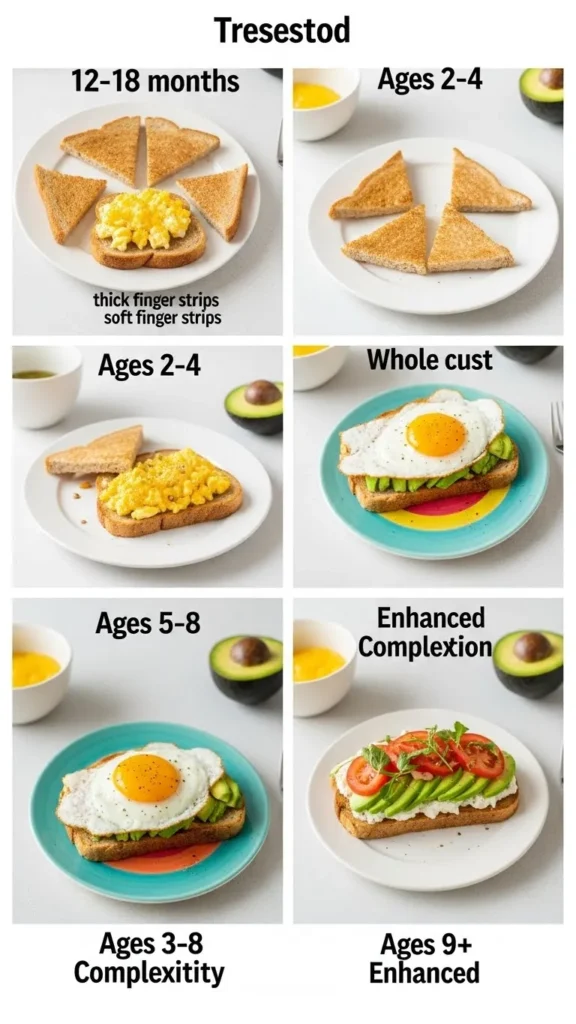
Ages 12-18 Months (Transitioning to Table Foods)
- Cut lightly toasted bread into “fingers” for easy gripping
- Cook the egg until firm (a runny yolk is a salmonella risk)
- Lightly mash the avocado so it’s not slippery
- Supervise closely and offer water between bites
Ages 2-4 (The Opinionated Years)
- Cut into triangles or use cookie cutters for “fun shapes”
- Offer the egg separately if they’re in a “no mixed foods” phase
- Let them “build” their own toast (a choice often means less resistance)
- Expect mess and embrace it. Sensory exploration is part of learning to eat
Ages 5-8 (Adventurous but Still Cautious)
- Cook the yolk firm for the safest choice
- Introduce variations like “spicy” with a pinch of red pepper flakes
- Let them crack eggs under supervision (skill-building!) and wash hands afterward
- Explain it simply: “Eggs and avocado have nutrients your brain uses, and whole grains give you energy for school!”
Ages 9-12 (Future Master Chefs)
- They can make this independently, with an adult nearby for the stove and the knife
- Encourage experimentation with toppings and variations
- A perfect first recipe for teaching knife skills (cutting avocado), with an adult close by, since avocados are slippery
- Talk about nutrition at their level. Many kids this age are curious
Teens (Perpetually Hungry)
- Double the recipe or they’ll eat yours too
- Add extra protein (see variations below)
- This gives energy for morning workouts and early school start times
- Quick enough that they might actually make it before rushing out
🧊 The Sunday Prep Strategy (30 Minutes = 5 Breakfasts)
Complexity kills execution. You’re not going to prep elaborate breakfasts every day. But 30 minutes on Sunday? That’s doable.
What You Can Prep:
✅ Hard boil 5–7 eggs → Cook until the yolk is firm, cool them quickly, and refrigerate promptly. Store in the shell in the fridge for up to 7 days, and write the date on them
✅ Portion avocados → If buying several, keep the ripe ones in the fridge and the rest on the counter
✅ Measure spices → Pre-mix salt + pepper in a small container
✅ Pre-slice bread → Freeze slices and toast from frozen. It won’t speed things up, but it keeps the bread fresh and the week organized
What You CAN’T Prep:
❌ Don’t pre-mash avocado → It browns quickly, even with lemon juice. For the best color, mash it fresh
❌ Don’t pre-toast bread → Gets soggy and sad
❌ Don’t assemble ahead → This is truly a “fresh assembly” meal
The Monday-Friday Reality:
With eggs already boiled, your morning workflow becomes:
- Toast bread (2 min)
- Mash half an avocado (1 min)
- Peel and slice egg (1 min). For toddlers, mash the egg into the avocado instead of slicing it
- Assemble (30 sec)
Total active time: Under 5 minutes. That’s achievable even when you hit snooze twice.
🔄 Variations for the Picky Eater or Adventurous Soul
For the “I Don’t Like Green Things” Kid
- Mash the avocado very smooth so it looks like butter
- Mix in a tiny bit of cream cheese to lighten the color (it contains milk)
- Start with less avocado (a thin layer), then gradually increase
- Rename it “Super Spread” or “Green Power Butter”
For the “Everything is Boring” Kid
- Add Everything Bagel seasoning on top (a small pinch: it contains sesame, a common allergen, and a good deal of salt)
- Sprinkle nutritional yeast for a cheesy flavor (check the label for added B vitamins)
- Drizzle a little honey (not for children under 2: honey is unsafe before 12 months, and added sugars are not recommended before age 2)
- Add microgreens for “fancy restaurant vibes”
For the “I Need More Food” Teen/Adult
| Addition | Protein Boost | Brain Benefit |
|---|---|---|
| Smoked salmon (2–3 oz) | +10–15 g protein | Omega-3s (EPA and DHA), which are part of brain cell membranes |
| Hemp seeds (3 tbsp) | +10 g protein | Protein and ALA, a plant-based omega-3 |
| Crumbled feta (1 oz) | +4 g protein | Calcium, which plays a role in nerve signaling |
| Sliced turkey (2–3 oz) | +12 g protein | Protein for fullness, plus B vitamins |
| Chickpeas (smashed) (½ cup) | +6 g protein | Fiber, plus folate and other B vitamins |
Smoked salmon and feta are high in sodium, so keep them for occasional use, and choose pasteurized cheese.
For the “Egg-Allergic” Family
- Swap the egg for smashed white beans seasoned with nutritional yeast, or a tofu scramble. Both add protein, but neither replaces the choline in eggs
- Add extra: Hemp seeds or seed butter for more protein
- Talk to your pediatrician or a registered dietitian about other sources of choline
Global Flavor Spins (Expand Their Palate)
| Variation | Add These Ingredients | Cultural Connection |
|---|---|---|
| Mediterranean | Crumbled feta, cherry tomatoes, oregano | Greek flavors |
| Mexican Twist | Black beans, salsa, cilantro, lime | Traditional desayuno |
| Middle Eastern | Za’atar spice, tahini drizzle, cucumber | Levantine breakfast |
| Asian-Inspired | Sesame oil, furikake, pickled veggies | Japanese breakfast elements |
Several of these toppings (tahini, sesame oil, furikake, and some za’atar blends) contain sesame, a common allergen. Cut cherry tomatoes in half or quarters for young children.
🥄 Equipment You Actually Need (Nothing Fancy)
- Toaster or toaster oven (if you don’t have one, oven broiler works)
- Small bowl (for mashing avocado)
- Fork (for mashing)
- Frying pan or pot (depending on egg method)
- Knife (for cutting the avocado, an adult task for young children)
- Spatula (for flipping eggs)
Tip: Most of these are easy to find second-hand if you’re starting from scratch.
🍎 Dietary Adaptations (Because Every Family is Different)
| Dietary Need | Adaptation Strategy 🥑 | Key Nutritional Note 🧠 |
|---|---|---|
| Gluten-Free | Use certified gluten-free bread. Make sure all toppings are certified gluten-free too. 🍞 | Nutrition is similar, but gluten-free breads vary widely in fiber and protein, so check the label |
| Dairy-Free | Naturally dairy-free! Use olive oil instead of butter for the egg. Use DF cheese alternatives if desired. 🥛 | Focuses on healthy plant-based fats. |
| Vegetarian | No changes needed—this recipe is already vegetarian as written! 🥗 | High in high-quality protein from the egg. |
| Vegan | Replace the egg with seasoned tofu scramble or chickpea mash. Add nutritional yeast. 🌱 | These provide different nutrients. Talk to your pediatrician or a registered dietitian about B12, choline, iron and DHA for a vegan child. Fortified nutritional yeast can add B12. |
| Low-Carb / Keto | Swap the bread for a Portobello mushroom cap, cucumber rounds, or keto bread. Double the egg. 🍳 | Increases fat and protein while cutting carbs. Restrictive diets for children should be supervised by a pediatrician. |
| Nut-Free | Naturally nut-free! Just double-check that any seed or granola toppings are processed in a nut-free facility. 🥜 | Check labels for cross-contact, and follow your school’s allergy rules. |
🧒 The Picky Eater Success Strategy (From the Trenches)
Let’s normalize something: Most kids go through picky phases. You’re not failing.
The Exposure Plan (A Gentle Approach)
Many children need many tries before they accept a new food, so patience is part of the plan.
Week 1-2: Make it for yourself. Eat enthusiastically. Don’t offer, don’t comment.
Week 3-4: Place a small piece on their plate. Say: “You don’t have to eat it.” Remove without comment if untouched.
Week 5-6: Let them mash the avocado (even if they won’t eat it). Reviews suggest that children’s cooking programs may positively influence food preferences (Hersch et al., 2014), and kids who help prepare meals at home tend to eat more fruits and vegetables (Quelly, 2019). Much of this evidence is observational and self-reported, so think of it as a low-pressure way to build familiarity, not a guarantee.
Week 7+: Keep offering every few days. Never force or bribe, since pressure tends to make mealtimes harder. Describe it positively: “Creamy!” “Crunchy!”
Specific Tactics
For Texture-Sensitive Kids :
Keep the avocado very smooth OR very chunky. Cut the toast into sticks for “dipping” in the mashed avocado.
For “No Mixed Foods” Kids :
Serve the components separately on a divided plate. This phase often passes with time.
When to Seek Help ?
Talk to your pediatrician if your child eats a very limited range of foods, is losing weight or not growing as expected, gags or shows strong distress around food, or if mealtimes are consistently very stressful.
🗓️ Meal Prep & Storage (The Realistic Version)
What Stores Well
- Hard-boiled eggs: Cool quickly, refrigerate promptly, and keep in the shell for up to 7 days
- Mashed avocado with lemon: Best fresh. Up to 24 hours in an airtight container with plastic wrap pressed on the surface (it may brown a little)
- Whole avocado (cut): Brush with lemon juice, wrap tightly, 1-2 days
What Doesn’t Store
- ❌ Assembled toast: Gets soggy within 30 minutes
- ❌ Fried/poached eggs: Texture degrades rapidly
- ❌ Toasted bread: Loses crispness quickly
The Freezer Hack
✅ Freeze mashed avocado in ice cube trays
- Add extra lemon juice before freezing
- Thaw a few cubes per toast
- Best within about 3 months
- The texture is slightly less creamy but acceptable. Frozen avocado works for spreading, not slicing
📈 Cost Comparison (Because Budgets Matter)
| Breakfast Option | Approx. Cost per Serving* | Protein | Prep Time | Brain-Supporting Nutrients |
|---|---|---|---|---|
| Avocado Toast with Egg | $1.50–2.00 | about 12 g | 10 min | Choline, healthy fats and fiber |
| Sugary cereal + milk | about $0.75 | about 8–10 g (mostly from the milk) | 2 min | Varies. Often fortified with B vitamins and iron, but high in added sugar |
| Drive-thru breakfast sandwich | $4–6 | 12–15 g | 15 min total | Choline from the egg. Often high in sodium and saturated fat |
| Protein bar | $2–3 | 10–20 g | 0 min | Varies widely by brand, so check the label |
| Instant oatmeal packet | about $0.50 | 4–5 g | 5 min | Whole grain fiber. Flavored packets often have added sugar |
| Homemade pancakes (classic recipe) | about $1.00 | about 4–6 g (2 pancakes) | 20 min | Varies |
*Approximate. Prices vary by region and brand.
Value assessment: Avocado toast with egg is a mid-range breakfast in cost, with more fiber and healthy fats than most cheaper options and very little prep time. Prices vary by region and brand.
🎯 Troubleshooting Common Problems
“My avocado is never ripe when I need it!”
Solution:
Buy firm avocados, store at room temperature. To speed ripening, place in paper bag with an apple or banana (ethylene gas accelerates process). Should ripen in 2-4 days. When ripe (yields to gentle pressure), move to fridge to pause ripening—buys you 3-5 extra days.
“The yolk always breaks when I flip my egg!”
Solution:
Don’t flip. Cover the pan with a lid and cook until the white is opaque and the yolk is firm (about 3–5 minutes, depending on your stove). The steam cooks the top. Or flip gently for an over-hard egg and accept the occasional break (still delicious).
“My kid refuses to eat anything with ‘green stuff’!”
Solution:
Three approaches:
- Rename it: “Super fuel spread” or “guacamole butter”
- Extremely thin layer so it’s barely visible
- Separate components: Toast + egg first, introduce avocado later when trust is built
“This seems too fancy for a Tuesday morning!”
Solution:
Start with Sundays only. Make it a relaxing weekend breakfast ritual. As it becomes familiar, your kid will request it on weekdays. Then it stops feeling fancy and starts feeling normal.
“My toast gets soggy immediately!”
Solution:
- Toast bread darker/crispier
- Pat avocado with paper towel if super watery
- Assemble literally right before serving
- Accept some sogginess—texture perfectionists may need to adjust expectations
🧪 The Science Behind This Nutritious Breakfast for Kids Brain Development
What the research says, and what it doesn’t.
1. Breakfast and School Performance 📈
A 2024 CDC report analyzed the 2023 Youth Risk Behavior Survey of over 20,000 U.S. high school students. Students with mostly A and B grades were less likely to skip breakfast every day. A systematic review of breakfast and academic performance in children and adolescents also found suggestive evidence that regular breakfast has a positive effect on school performance, with the clearest effects on math grades in undernourished children. These findings are suggestive, not proof, and neither looked at avocado toast specifically.
2. Protein at Breakfast 🥚
A 2021 systematic review and meta-analysis in Nutrients of randomized trials in children and adolescents aged 7–19 found that protein-rich breakfasts lowered later calorie intake and appetite, though most of the included studies were of low quality. In practice, that supports eggs for keeping kids full through the morning.
3. The Choline-Memory Connection 🧠
Eggs are one of the richest dietary sources of choline. A Cornell randomized trial found that children whose mothers consumed about 930 mg of choline a day during the third trimester of pregnancy (about double the recommended amount) did better on a sustained attention task at age 7 than children whose mothers consumed 480 mg. The study is about choline during pregnancy, not about children eating eggs, but it shows why researchers take choline seriously for brain development.
- The Mechanism: Choline creates acetylcholine, a neurotransmitter involved in memory.
4. Healthy Fats, Lutein and Academic Achievement 🥑
In studies from the University of Illinois, 8- and 9-year-olds with higher lutein levels in the eye did better on standardized academic tests, even after accounting for IQ, fitness and body composition. The researchers noted that the results do not prove lutein causes the difference. Avocado and egg yolks contain some lutein, though leafy greens contain more.
5. Blood Sugar and Breakfast ✨
Research on blood sugar and children’s thinking is mixed. A systematic review and meta-analysis comparing high- and low-glycemic-index breakfasts found no clear difference in memory or attention in children and adolescents. So instead of promising “no crashes,” we stick to what a balanced breakfast reliably does: with fiber, protein and fat, it tends to keep kids fuller for longer.
🌟 Final Thoughts (Parent to Parent)
This nutritious breakfast for kids brain development isn’t complicated—it’s practical. Some mornings will be Instagram-worthy, others will involve eating in the car. Both count.
The goal isn’t perfection—it’s progress. If this becomes part of your weekly rotation even once or twice, you’ve given your child about 50 to 100 brain-boosting breakfasts over the year. That adds up.
Complexity kills execution. This is simple, achievable, and designed for real families with real kids on real mornings.
Your kid’s brain will thank you. 🧠✨
🔗 Keep Exploring
Same ingredient, different angle:
- Simple Avocado Toast with Egg (Quick everyday version)
- Gourmet Smoked Salmon Avocado Toast (Upgrade for weekends)
- Healthy Egg & Vegetable Muffins Breakfast: A Nutritious Recipe (Make-ahead breakfast option)
- 10 Zinc-Rich Recipes for Kids
Keep building the brain-boosting plate:
- 🧠 Foods to Help Kids Focus: What Actually Works (+ 4 Recipes They’ll Eat) A guide to why avocado and egg make a brain-supporting breakfast, with the full weekly nutrition strategy to go with it.
- 🥚 Golden Scrambled Eggs: The Brain Fog Eraser Your Kids Actually Want to Eat Same choline powerhouse, different format — perfect for the mornings when toast isn’t happening.
- 🥩 Steak Nuggets for Kids: The Brain Food They’ll Beg For Breakfast covered with avocado + egg — now complete the day with iron and zinc at dinner.
Pin this recipe • Save for later • Share with exhausted parent friends
Have questions or want to share your kid’s reaction? Drop a comment below—we read every single one and love hearing your stories!
❓ FAQs (The Questions Everyone Actually Asks)
How do I prevent the avocado from browning?
Lemon or lime juice is your best friend—the citric acid slows oxidation. For storage, press plastic wrap directly onto the surface (no air contact). The pit doesn’t actually prevent browning (that’s a myth), but it does protect the area directly under it.
What’s the best egg style for this toast?
Depends on your eater:
- Fully cooked (over-hard or hard-boiled): The safest choice for young kids, easy to eat neatly, great for meal prep
- Scrambled (cooked until firm): Kid-friendly texture and the fastest to cook
- Runny yolk (sunny-side-up or poached): Best flavor, but it carries a small risk of salmonella. Not recommended for children under 5
Is this safe for babies?
With modifications, yes. For babies about 9 months and older who are doing baby-led weaning (check with your pediatrician first):
- Cut lightly toasted bread into thick strips (easy to grasp)
- Scramble the egg until firm (no runny parts)
- Spread avocado thinly (less slippery)
- Skip added salt
- Always supervise closely
Consult your pediatrician before introducing any new foods, especially eggs and wheat.
What if my kid is allergic to eggs?
Try a tofu scramble seasoned with turmeric (for color) and nutritional yeast, or smashed white beans. Both add protein, but neither replaces the choline in eggs. If you add tahini, remember it is made from sesame, a common allergen. Talk to your pediatrician or a registered dietitian about other sources of choline.
How do I know if an avocado is ripe?
Gentle squeeze test: Should yield to gentle pressure but not feel mushy. Color isn’t always reliable (some varieties stay green even when ripe). The stem test: Remove small stem—if green underneath, it’s ripe. If brown, it’s overripe.
Can I make this ahead for school lunch boxes?
Not ideally—avocado browns and bread gets soggy. Better option: pack the components separately (toast, hard-boiled egg, a small container of mashed avocado with lemon) and assemble just before eating. Keep the egg cold with an ice pack until lunch.
Is sourdough better than whole wheat?
Both are great:
- Sourdough: Tangy flavor. Fermentation may make it easier to digest for some people and may lower the blood sugar response, but this varies by loaf. It is not gluten-free.
- Whole wheat: More fiber and B vitamins, and usually more affordable.
Choose based on your priorities and what your family enjoys.
Does this breakfast support kids’ brain development and focus at school?
A balanced breakfast with protein, healthy fats and fiber tends to keep kids full through the morning, and research links eating breakfast with better school performance, though it shows associations, not proof. Eggs provide choline, a nutrient involved in memory, and avocado adds healthy fats. No single food determines how well a child focuses, but this is a nutritious, filling start to the day.