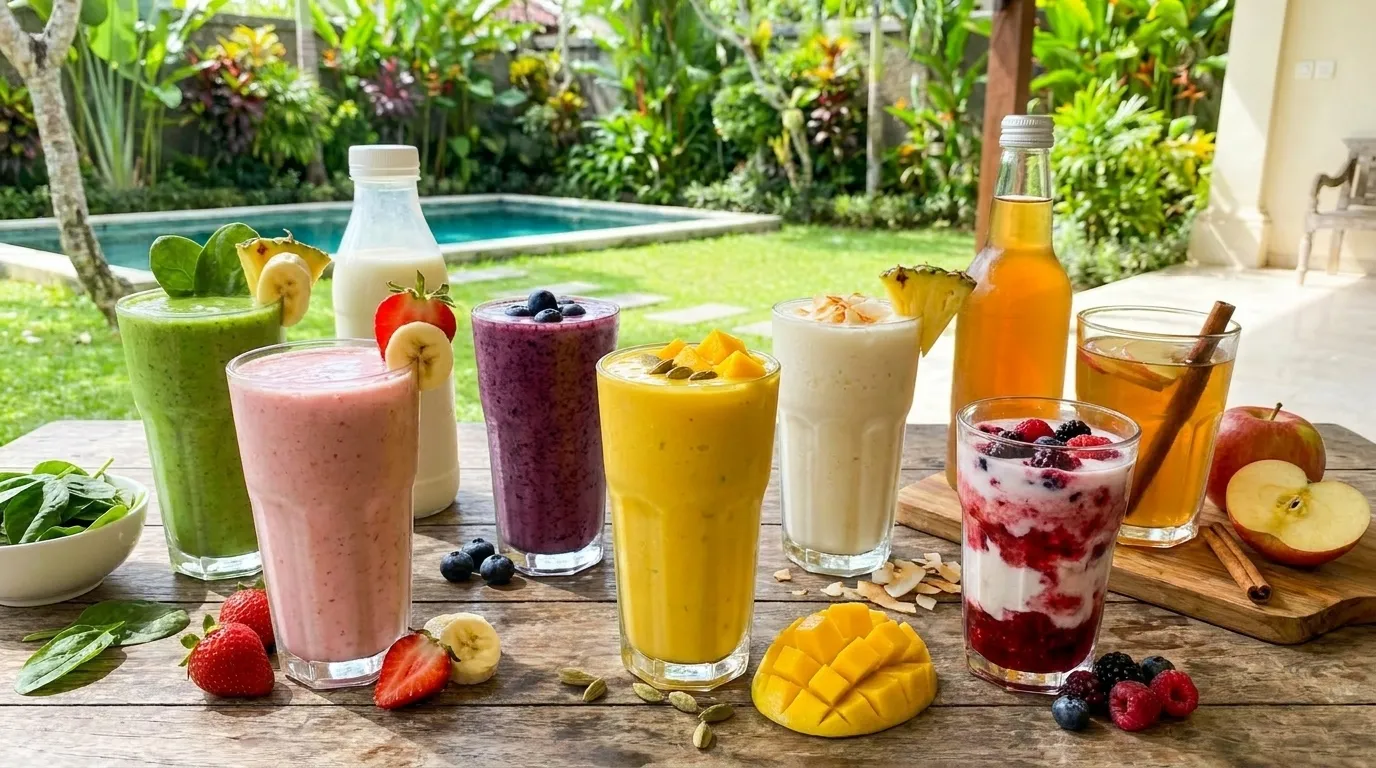
7 Kid-Friendly Probiotic Drinks That Build Gut Health and Boost Focus
Probiotic drinks for kids are fermented or culture-rich beverages that deliver beneficial bacteria directly to the gut — supporting digestion, immunity, and the gut-brain axis that regulates mood, focus, and behavior. Here are 7 options ready in 5 minutes:
| Drink | Probiotic Source | Key Benefit | Prep Time |
|---|---|---|---|
| Strawberry Banana Smoothie | Plain yogurt | Vitamin C + gut health | 5 min |
| Blueberry Kefir Drink | Kefir | Antioxidants + calcium | 5 min |
| Mango Lassi | Plain yogurt | Vitamin A + hydration | 5 min |
| Pineapple Coconut Smoothie | Fermented coconut milk | Vitamin C + fiber | 5 min |
| Apple Cinnamon Kombucha | Kombucha | Anti-inflammatory | 5 min |
| Berry Yogurt Drink | Plain yogurt | Antioxidants + fiber | 5 min |
| Tropical Green Smoothie | Kefir | Vitamin A + iron | 5 min |
Because a calmer, more focused child after school isn’t magic — it’s gut health. Research shows 90% of serotonin is produced in the gut, not the brain. These seven drinks take 5 minutes to make, taste like treats, and give the gut the bacterial diversity it needs to regulate mood, digestion, and immunity. Pick two, rotate them through the week. That’s the whole system.
Did you know?
Over 80% of your child’s immune system lives in their gut! While these probiotic drinks build a healthy foundation, pairing them with specific nutrients can supercharge their defense. Once you’ve picked a drink, don’t miss our Immune-Boosting Snacks for Kids to complete the health duo.
Table of Contents
🥗 Dietary Adaptations: Dairy-Free & Vegan Swaps
| Original Ingredient | Swap Option | Pro Tip for Success |
|---|---|---|
| Yogurt (dairy) | Coconut yogurt or Almond yogurt | Look for “live active cultures” on the label—same probiotic benefits |
| Kefir (dairy) | Water kefir or Coconut kefir | Lighter, slightly fizzy texture kids love |
| Honey | Maple syrup or Agave nectar | Vegan-friendly with a lower glycemic index |
| Cow’s milk | Oat milk or Almond milk | Choose fortified versions for added calcium & vitamin D |
| Greek yogurt | Cashew-based yogurt | Creamier consistency, higher in healthy fats |

💡 Noah’s Tip:
Always check the label for ‘live active cultures’ when buying yogurt or kefir — this is the only phrase that guarantees the probiotic bacteria survived pasteurization. ‘Made with yogurt’ or ‘contains yogurt’ doesn’t count. The label must say ‘live active cultures’ to deliver real gut health benefits.
🔪 Equipment You’ll Need
| Equipment | Purpose | Budget-Friendly Alternative |
|---|---|---|
| ⚡ Blender | All 7 drinks — smooth, creamy, chunk-free | Immersion blender works for smoothies |
| 🥄 Measuring cups and spoons | Consistent portions for balanced nutrition | Eyeball after a few tries — these recipes are very forgiving |
| 🫙 Freezer bags | Sunday smoothie pack prep — freeze fruit portions | Any zip-lock bags work perfectly |
| 🥤 Fun cups with straws | Presentation matters — colorful straws increase acceptance | Any cup — colored straws cost $2 and make a real difference |
| 🫙 Airtight bottles | Store leftover drinks up to 48 hours in the fridge | Any bottle with a tight lid |
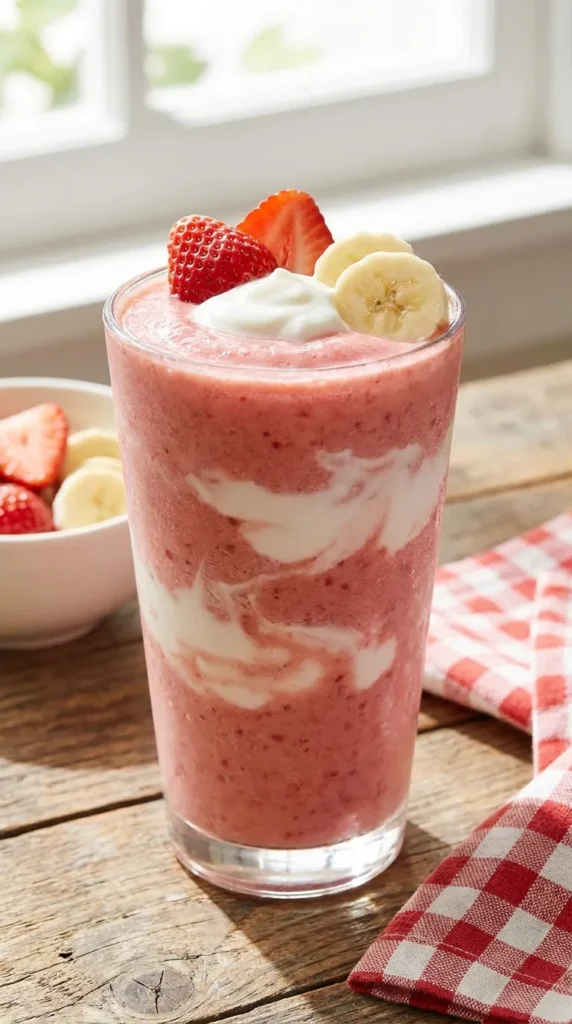
1. Strawberry Banana Smoothie
Ingredients :
- 1 cup plain yogurt (probiotic-rich)
- 1 cup strawberries, hulled
- 1 banana
- 1/2 cup milk (dairy or non-dairy)
- 1 tablespoon honey (optional)
Prep time :
5 minutes
No cooking required
Nutrition Information (per serving) :
- Calories: 150
- Protein: 6g
- Carbohydrates: 30g
- Fiber: 3g
- Calcium: 20% DV
- Vitamin C: 70% DV
Benefits :
- Probiotics: Yogurt provides beneficial bacteria that support gut health.
- Vitamins: Strawberries and bananas are rich in vitamins C and B6, which support immune function and brain health.
- Fiber: Bananas add dietary fiber, aiding in digestion.
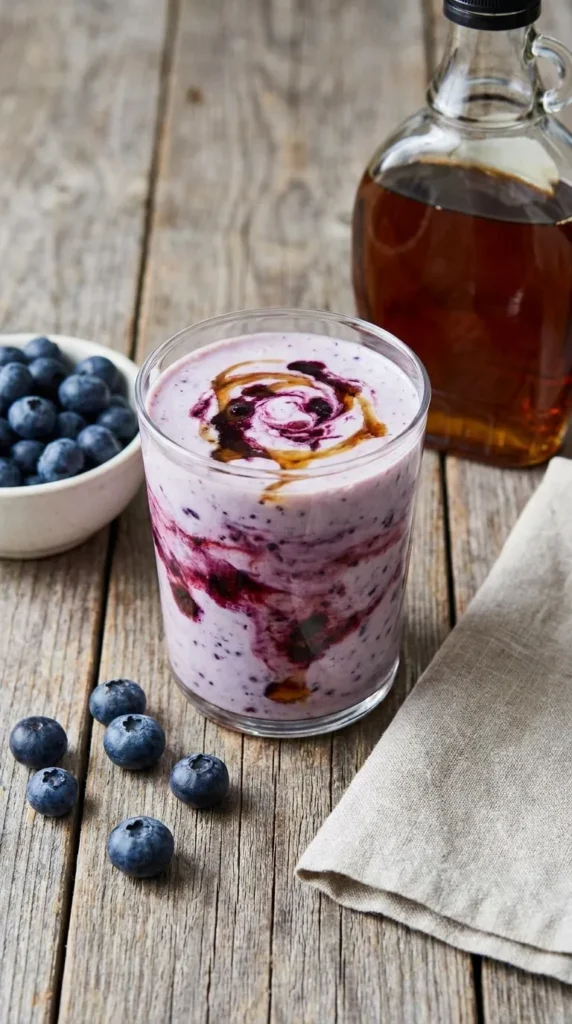
2. Blueberry Kefir Drink
Ingredients :
- 1 cup kefir (probiotic-rich)
- 1/2 cup blueberries
- 1 tablespoon maple syrup (optional)
Prep time :
5 minutes
No cooking required
Nutrition Information (per serving) :
- Calories: 120
- Protein: 5g
- Carbohydrates: 20g
- Fiber: 2g
- Calcium: 25% DV
- Vitamin C: 15% DV
Benefits :
- Probiotics: Kefir is a fermented drink that contains a variety of beneficial bacteria and yeasts.
- Antioxidants: Blueberries are high in antioxidants, which help protect cells from damage.
- Calcium: Kefir provides a good source of calcium, essential for bone health.
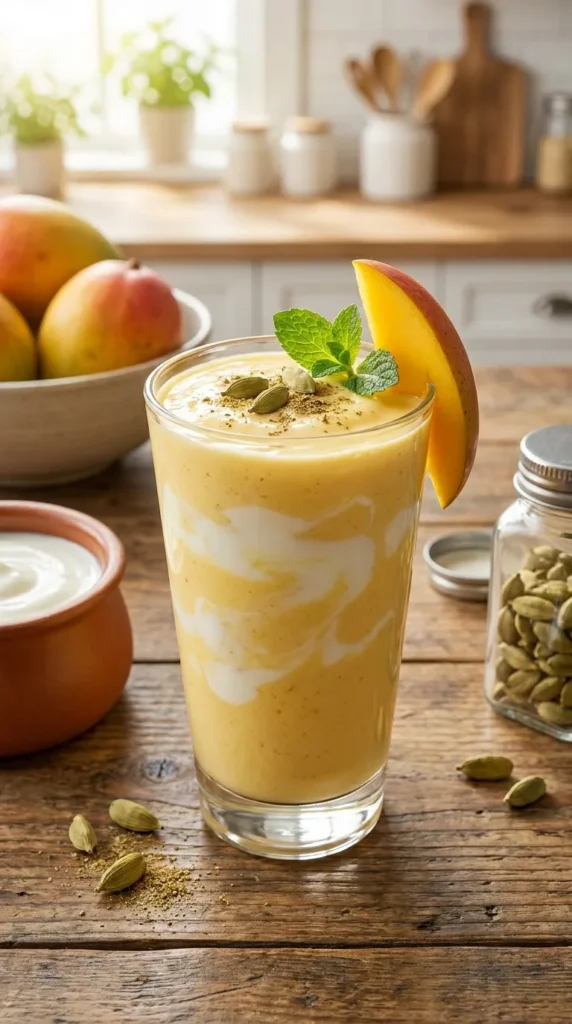
3. Mango Lassi
Ingredients :
- 1 cup plain yogurt (probiotic-rich)
- 1 cup mango chunks (fresh or frozen)
- 1/2 cup water
- 1 tablespoon honey (optional)
- A pinch of cardamom (optional)
Prep time :
5 minutes
No cooking required
Nutrition Information (per serving) :
- Calories: 160
- Protein: 6g
- Carbohydrates: 35g
- Fiber: 2g
- Calcium: 20% DV
- Vitamin A: 25% DV
Benefits :
- Probiotics: Yogurt provides beneficial bacteria that support gut health.
- Vitamins: Mangoes are rich in vitamins A and C, which support vision and immune function.
- Hydration: The water content helps keep kids hydrated.
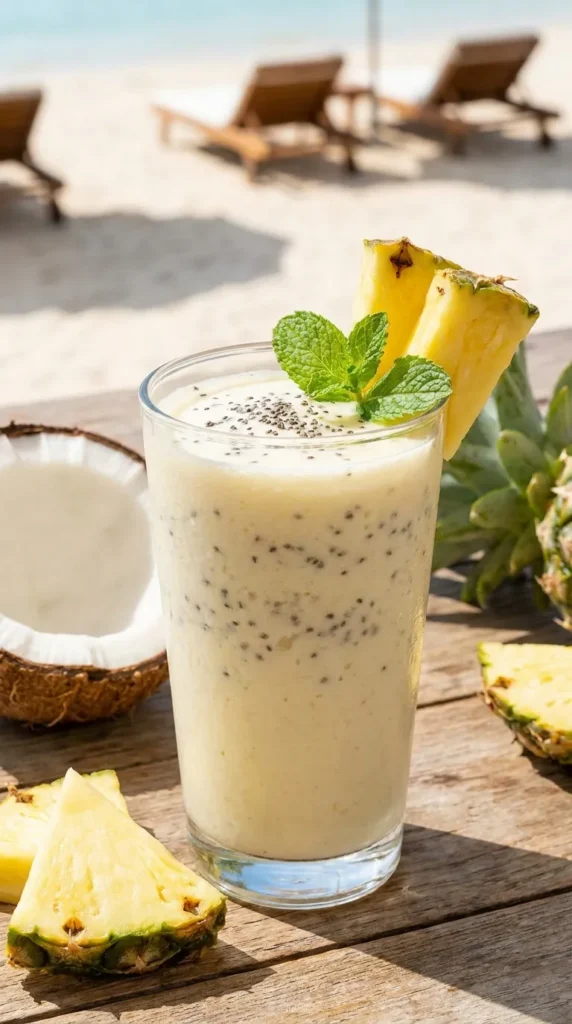
4. Pineapple Coconut Smoothie
Ingredients :
- 1 cup coconut milk (probiotic-rich if using fermented coconut milk)
- 1 cup pineapple chunks
- 1/2 banana
- 1 tablespoon chia seeds
Prep time :
5 minutes
No cooking required
Nutrition Information (per serving) :
- Calories: 180
- Protein: 3g
- Carbohydrates: 30g
- Fiber: 5g
- Vitamin C: 80% DV
- Potassium: 10% DV
Benefits :
- Probiotics: Fermented coconut milk provides beneficial bacteria.
- Vitamins: Pineapple is high in vitamin C, supporting immune health.
- Fiber: Chia seeds add dietary fiber, aiding in digestion.
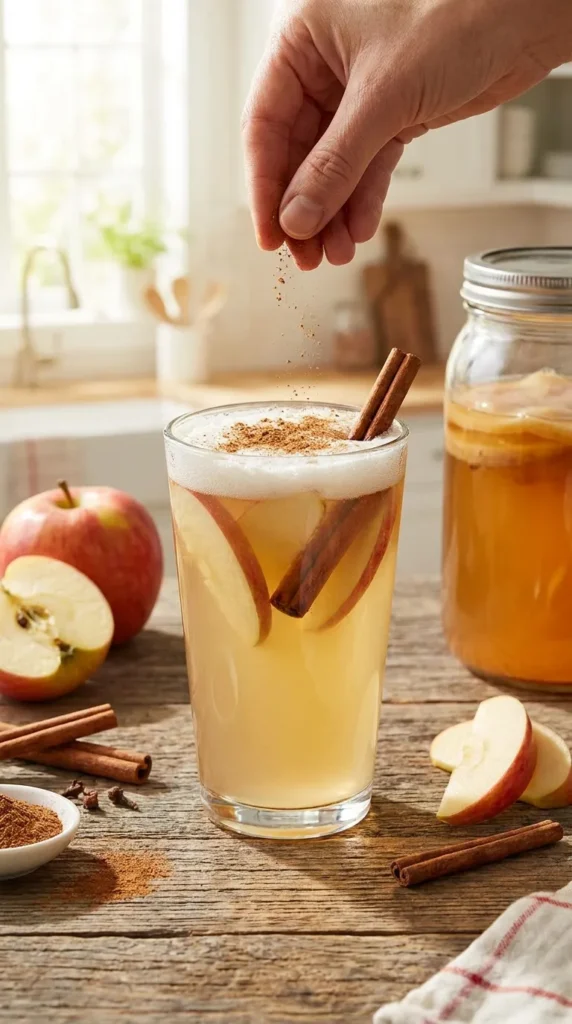
5. Apple Cinnamon Kombucha
Ingredients :
- 1 cup apple juice
- 1/2 cup kombucha (probiotic-rich)
- A pinch of cinnamon
Prep time:
5 minutes
No cooking required
Nutrition Information (per serving) :
- Calories: 100
- Protein: 0g
- Carbohydrates: 25g
- Fiber: 0g
- Vitamin C: 10% DV
- Potassium: 5% DV
Benefits :
- Probiotics: Kombucha is a fermented tea that contains beneficial bacteria and yeasts.
- Antioxidants: Apple juice provides antioxidants that support overall health.
- Flavor: Cinnamon adds a delicious flavor and has anti-inflammatory properties.
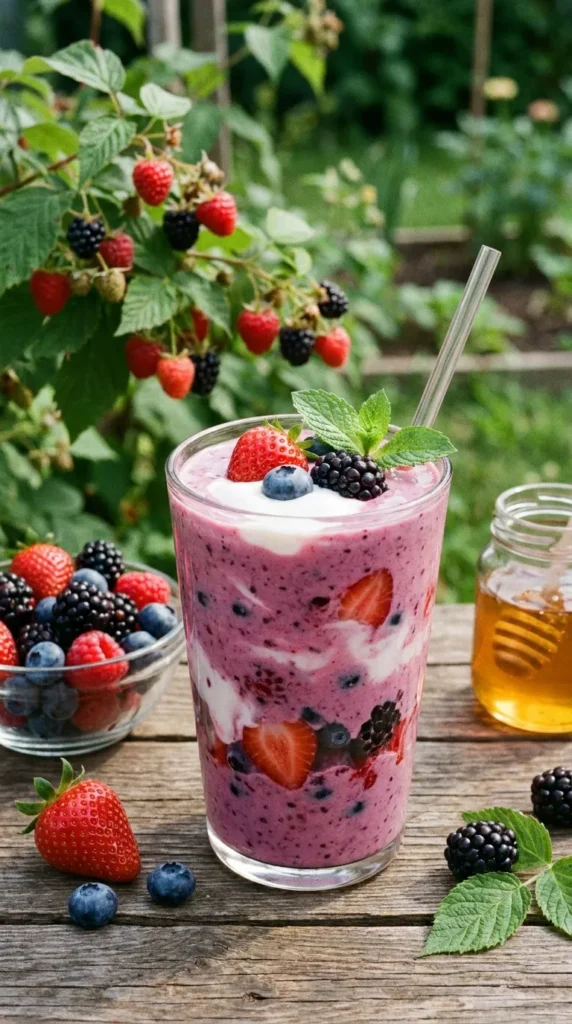
6. Berry Yogurt Drink
Ingredients :
- 1 cup plain yogurt (probiotic-rich)
- 1/2 cup mixed berries (strawberries, blueberries, raspberries)
- 1/2 cup water
- 1 tablespoon honey (optional)
Prep time :
5 minutes
No cooking required
Nutrition Information (per serving) :
- Calories: 140
- Protein: 6g
- Carbohydrates: 25g
- Fiber: 4g
- Calcium: 20% DV
- Vitamin C: 50% DV
Benefits :
- Probiotics: Yogurt provides beneficial bacteria that support gut health.
- Antioxidants: Mixed berries are high in antioxidants, which help protect cells from damage.
- Fiber: Berries add dietary fiber, aiding in digestion.
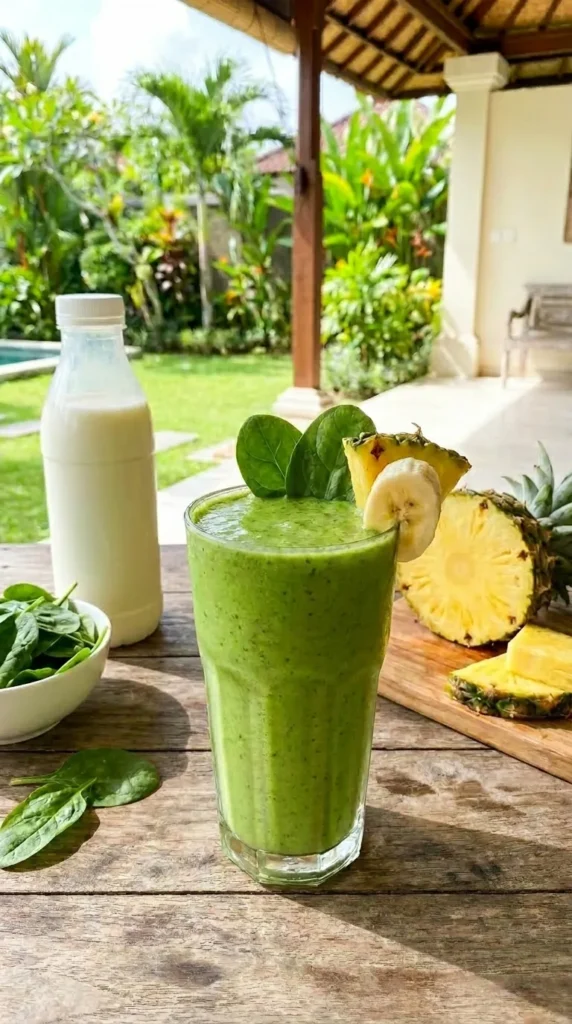
7. Tropical Green Smoothie
Ingredients :
- 1 cup kefir (probiotic-rich)
- 1/2 cup spinach
- 1/2 cup pineapple chunks
- 1/2 banana
- 1 tablespoon honey (optional)
Prep time :
5 minutes
No cooking required
Nutrition Information (per serving) :
- Calories: 130
- Protein: 5g
- Carbohydrates: 25g
- Fiber: 3g
- Calcium: 20% DV
- Vitamin A: 30% DV
Benefits :
- Probiotics: Kefir provides beneficial bacteria that support gut health.
- Vitamins: Spinach and pineapple are rich in vitamins A and C, which support vision and immune function.
- Fiber: Spinach and banana add dietary fiber, aiding in digestion.
👶 How to Serve Probiotic Drinks by Age
| Age Group | Best Options | Quick Tip |
|---|---|---|
| Babies 6-12m | Not recommended as standalone drink — add 1 tbsp plain yogurt to purees | Probiotics via food, not drinks, under 12 months |
| Toddlers 12-24m | Strawberry Banana Smoothie, Mango Lassi (no honey) | Dilute 50/50 with water or milk. Skip honey under 12 months |
| Preschoolers 3-5y | All yogurt-based smoothies | ¼ cup serving is sufficient. Serve with a meal, not as a standalone snack |
| Early School 6-8y | Blueberry Kefir, Berry Yogurt Drink, Tropical Green Smoothie | Daily habit works best — pair with breakfast 3x per week minimum |
| Tweens 9-12y | Apple Cinnamon Kombucha, Blueberry Kefir | Max 4oz kombucha per day — natural carbonation + caffeine trace |
⚠️ Always skip honey for children under 12 months. Limit kombucha to 4oz per day for children under 12 — it contains trace amounts of caffeine and alcohol from fermentation.
😤 Picky Eater Strategy
- Start with Strawberry Banana Smoothie — the sweetest, most familiar flavor profile on this list. Zero detectable “health food” taste
- Mango Lassi wins over kids who refuse plain yogurt — the mango completely masks the tanginess that makes picky eaters resist fermented drinks
- Serve in an opaque cup with a fun straw — what kids can’t see, they’ll happily drink. The Tropical Green Smoothie is bright green but tastes tropical
- Let kids choose their own fruit add-in from small bowls — a berry here, a banana slice there. Ownership at the blender = zero resistance at the table
- The Apple Cinnamon Kombucha is the most approachable fermented option — it tastes like sparkling apple juice, not vinegar
- Introduce kefir by blending 50/50 with regular milk first — then gradually shift to 100% kefir over 3-4 weeks
🧠 Why Probiotics Build Brains ?
The gut-brain connection isn’t just trendy science—it’s real. Research shows that 90% of serotonin (the “happy chemical”) is actually produced in the gut, not the brain. This is why what your child drinks can directly impact their mood, focus, and behavior.
How probiotics help your child thrive ?
Reduced meltdowns: Balanced gut bacteria support stable mood regulation. When digestion is smooth, emotional regulation improves.
Better focus: A healthy gut means better nutrient absorption—including the B vitamins and omega-3s that fuel brain function and concentration.
Stronger immunity: Did you know 70% of immune cells live in the gut? Probiotics strengthen this first line of defense against colds and infections.
Parent win: A study published in Pediatrics Journal (2019) found that children who consumed probiotics regularly experienced 23% fewer sick days compared to those who didn’t.
🔗 Want more brain-boosting meals? Explore our Brain-Boosting Recipes Category for recipes designed to support focus, memory, and gut health.
🧒Why Kids Enjoy These Probiotic Drinks ?
Kids enjoy these probiotic drinks because they are delicious, colorful, and fun to drink. The natural sweetness from fruits and the creamy texture from yogurt or kefir make these drinks appealing to children. Additionally, the variety of flavors and the opportunity to try new combinations keep kids excited about drinking them. These drinks are not only tasty but also provide essential nutrients that support their growth and overall health.
🧺Added Bonus🎥
For more healthy snack ideas and recipes, check out this fun Youtube Video: Probiotic & Immunity Boosting Foods for Babies, Kids and Toddlers. It’s a great resource to get inspired and involve your kids in making nutritious brakfasts!
🧑Conclusion
Seven probiotic drinks, five minutes each, zero complicated technique. The gut-brain connection isn’t wellness marketing — it’s peer-reviewed science. And these drinks are the most practical way to act on it daily, without adding complexity to an already busy morning routine.
Start with the two flavors your kids already accept. Build from there. The goal isn’t a perfect probiotic rotation — it’s consistent exposure to beneficial bacteria three to four times a week. That’s enough to shift the microbiome in a meaningful direction over four to six weeks. 🌈👨👩👧👦
Tried one of these probiotic drinks with your kids? Drop a comment below and tell us which one became the household favorite — we read every single one. 👇💖
🧾 Related Recipes
👉 Top 5 Fortified Drinks for Kids
🥗 Pair Your Drinks with a Balanced Meal
Supporting your child’s gut health with probiotic drinks is a perfect start! To keep the momentum going, here are our top picks to complete the meal:
The “Immune & Brain” Power Duo (New!)
- 👉 Immune-Boosting Snacks for Kids: Probiotics prepare the gut, and these snacks provide the defense. It’s the ultimate shield for your little ones!
- 👉 Golden Eggs for Toddlers: Fuel their focus. The healthy fats in our “Brain Fog Eraser” eggs work even better when the gut is healthy.
The “Gut Health” Support (Keep these!)
👉 Beef and Sweet Potato Shepherd’s Pie: A hearty, clean-eating classic packed with fiber and lean protein to keep little tummies happy.
👉 10 High Fiber Snacks for Kids Remember, probiotics need fiber to thrive! These snacks act as “fuel” for the good bacteria in your drinks.
❓ FAQs
1. At what age can kids start drinking probiotics?
Most pediatricians recommend introducing probiotics around 6 months of age, after your baby has started eating solid foods. Always consult your child’s doctor before starting probiotics, especially if they have underlying health conditions.
2. How often should kids drink probiotics?
Daily consumption is ideal for maximum gut health benefits, but even 3-4 times per week can make a noticeable difference in digestion and immunity.
3. Will my picky eater actually drink these?
Start with the sweeter, fruit-forward options like Mango Lassi or Strawberry Banana Smoothie. Let your child help you blend the ingredients—kids are much more likely to drink something they helped create!
4. Can I use store-bought yogurt or kefir?
Absolutely! Just check the label for “live active cultures” to ensure you’re getting the probiotic benefits. Avoid brands with more than 15g of added sugar per serving.
5. Do probiotics help with constipation in kids?
Yes! Kefir and yogurt-based drinks can significantly improve regularity. Most parents notice softer, more frequent bowel movements within 3-5 days of consistent probiotic intake.
6. Are these drinks safe for lactose-intolerant kids?
Yes—simply use the dairy-free swaps from the table above. Coconut yogurt, almond yogurt, and water kefir provide the same probiotic benefits without lactose.
7. Can I prep these drinks in advance?
Most probiotic drinks stay fresh in the fridge for 24-48 hours. Smoothies may separate slightly—just give them a quick shake before serving. Avoid freezing, as this can reduce probiotic potency.